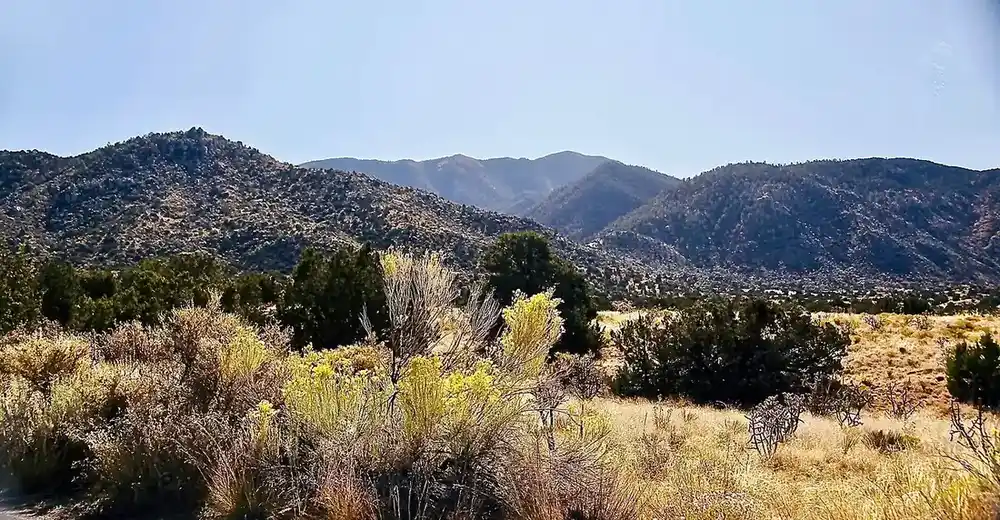
Roof Replacement in High Desert
Roof Replacement for High Desert homes - local conditions, a clear process, and one call to get it started.
There is a reason this page exists separately from the Albuquerque one: High Desert runs its own version of every roofing problem in the valley.
Nobody in High Desert replaces a roof for fun. They do it when the math flips - when the next repair costs real money and buys a season instead of a decade. A replacement done at the right time, in the right weather window, is the one roof decision that ends the leak cycle instead of postponing it.
High Desert is a master-planned community pressed against the Sandia foothills at the top of Tramway Boulevard, bordering the Elena Gallegos Open Space. Custom Southwest and contemporary homes follow the natural desert landscaping, with trailheads, arroyos and granite boulders woven between the streets.
Local conditions shape the work here. Custom homes from the 1990s onward - pueblo and contemporary styles, mostly flat parapet and low-slope roofs with some tile - and that shapes the roofing work directly. Foothill weather arrives first here: wind gusts funneling out of the canyons, hail riding monsoon cells off the mountain, and intense sun on low-slope membranes. For roof replacement in High Desert, a scoped quote here - layers, deck terms, grades in writing - is worth more than any number given from the street.
The conversation at the door in High Desert usually starts with weather: the storm in July, the wind in April, the winter the pipes and the seams both complained. roof replacement here is weather work, and the roof near the Elena Gallegos Open Space is examined as a record of every season it has stood through - because that record is exactly what it is.
Signs High Desert Homes Need Roof Replacement
Age past local service life
In Albuquerque's sun, shingles commonly give 18-25 years, tile underlayment 20-30, foam coatings 5-7 per coat.
Coatings that no longer take
A foam or flat roof whose coating peels, bubbles or will not adhere is telling you the substrate has failed, not just the coat.
Widespread surface wear
Curling, cracking or balding shingles across whole slopes - not just one patch - mean the surface itself is done.
Why This Work Runs in High Desert
The weather window matters as much as the material. Spring and fall offer the calm, dry stretches a tear-off needs; a roof opened up in monsoon season is a gamble nobody should take with your ceilings underneath it.
Foothill weather arrives first here: wind gusts funneling out of the canyons, hail riding monsoon cells off the mountain, and intense sun on low-slope membranes. Scuppers and canales clog with desert grit and piñon needles between storms.
In High Desert, that plays out street by street - and the tear-off findings, photographed as they emerge, are what the final scope is checked against. The pattern in High Desert rewards the homes that renew in the off-season; the rest meet the same problem at its seasonal peak.
Summer splits in two: the hot, dry bake of June, when roof surfaces pass 150 degrees and coatings chalk and shingles soften, and the monsoon from July into September, when afternoon storms test every seam, flashing and drain the sun spent months weakening. Most Albuquerque leaks are born in June and discovered in August.
Expect the findings to be specific: this canale, that flashing joint, the seam at the parapet, the felt at the valley. Vague findings produce vague results. A visit that ends with a map - of entries, of drainage, of what gets fixed and what gets watched - is a visit that was worth booking, whatever the roof turns out to need.
The turning season rearranges exposure in High Desert: the slope that baked all summer is the slope the first storm will interview.
If the problem involves the attic, check that the hatch actually opens. Painted-shut hatches and blocked access panels are the most common reason a first visit in Albuquerque ends with a second one scheduled.
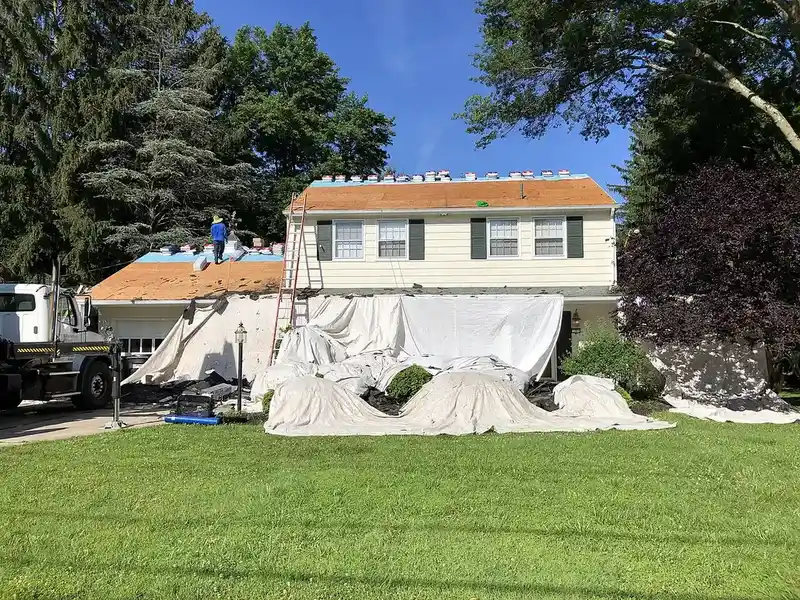

How Roof Replacement Works in High Desert
The full step-by-step process for this service - inspection, scope, the work itself and follow-up - is laid out on the main Roof Replacement page. In High Desert the same sequence runs with the local map in hand: the drainage around the Elena Gallegos Open Space, the housing pattern described above, and the exposure this neighborhood actually carries.
The High Desert Angle
In High Desert, the job starts from the ground truth of the neighborhood - the blocks near the Elena Gallegos Open Space, the age of the housing, and the exposure the terrain hands it. The buildings themselves give the first clues. Custom homes from the 1990s onward - pueblo and contemporary styles, mostly flat parapet and low-slope roofs with some tile.
Layer the roofscape on top and the job defines itself. Foothill weather arrives first here: wind gusts funneling out of the canyons, hail riding monsoon cells off the mountain, and intense sun on low-slope membranes. Scuppers and canales clog with desert grit and piñon needles between storms. Which is the whole method: read High Desert first, then do roof replacement work that fits what the reading found.
High Desert does not sit alone on the map. It weathers the same storms as Far Northeast Heights, Sandia Heights and Glenwood Hills - the same cells build over the mountain, the same sun works the same materials, and the same seasons move through all of them within the same few weeks. Homes on these blocks share crews, routes and seasons - which is why a roof solved properly on one street tends to stay solved.
On the route map, High Desert sits in the albuquerque neighborhood group, ZIP 87122 - close enough to Far Northeast Heights, Sandia Heights that crews work them on the same runs. For roof replacement, that grouping matters - exposure, timing and material age are read at the route level, not guessed address by address.
Prevention That Helps in High Desert
- Get the replacement scoped in spring or fall, not during monsoon emergencies.
- Plan the first inspection a year after replacement, then yearly.
- Confirm how water leaves the new roof: canales, scuppers, slope and drains.
Custom homes from the 1990s onward - pueblo and contemporary styles, mostly flat parapet and low-slope roofs with some tile.
Keep Exploring
Roof Replacement nearby:
- Roof Replacement in Far Northeast Heights
- Roof Replacement in Sandia Heights
- Roof Replacement in Glenwood Hills
- Roof Replacement in North Albuquerque Acres
More services in High Desert:
- Roofing in High Desert
- Metal Roofing in High Desert
- Emergency Roof Repair in High Desert
- Shingle Roofing in High Desert
See the full roofing page for High Desert and the Roof Replacement overview for Albuquerque.
Roof Replacement in High Desert - Questions
Should I replace my High Desert roof before it leaks?
If the surface is at the end of its service life, yes - a planned replacement in a dry window costs less than an emergency one, and it protects the deck. A roof replaced one year early loses little; a roof replaced one storm late can take ceilings and insulation with it.
How long does a roof replacement in High Desert take?
Most Albuquerque homes take two to four days once work starts: a day or less to tear off and repair the deck, and the rest to build the new roof. Flat and foam roofs run on their own rhythm, and weather - especially monsoon storms - can pause a job to keep the house dry.
When is Roof Replacement most needed in High Desert?
Need follows the season and the neighborhood together: the bake months raise the baseline everywhere, and High Desert's specific exposure - its slope aspect, its building era, its tree cover - decides which weeks bite hardest. A local inspection reads both clocks at once.
A Leak Over the Living Room, Tiles on the Driveway or a Flat Roof Holding Water?
One call connects you with a roofing professional serving Albuquerque and the surrounding communities - inspection, repair, replacement and upkeep.
📞 Call Now