How Long Does a Roof Last in Albuquerque?
The same roof lasts years less in Albuquerque than in a mild climate - UV at a mile high, daily temperature swings and wind spend a roof's life faster than rain ever will.
Read the Guide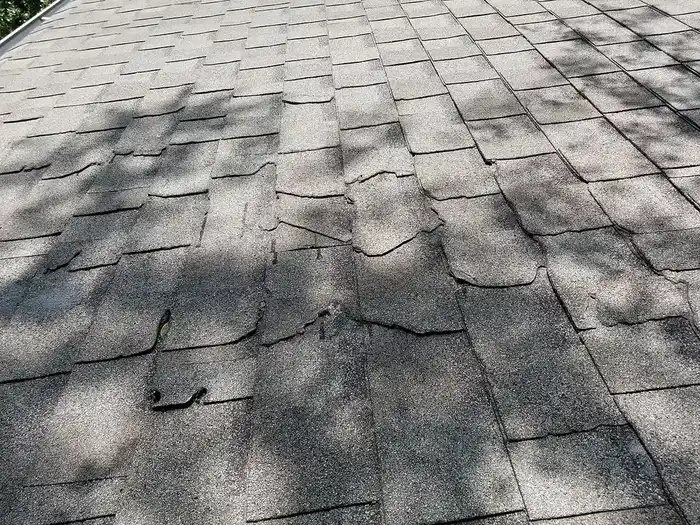
Hail damage is mostly invisible from the ground - it bruises shingles, cracks tile, pits foam and loosens fasteners, and the proof lives in a hands-on inspection with dated photos.
Problem: Hail damage is mostly invisible from the ground - it bruises shingles, cracks tile, pits foam and loosens fasteners, and the proof lives in a hands-on inspection with dated photos.
Solution: Check the witnesses first (dented soft metals, granule piles, fragments in the yard), then get the roof read slope by slope while the evidence and the claim window are both fresh.
When to call: Call within days of any storm that dropped hail an inch or larger, dented your vents, or started a new leak - and before signing anything with crews who appear at the door.
Albuquerque hail has a local character: it is brewed by monsoon cells over the mountains and dropped in stripes - one neighborhood hammered, the next untouched, a single street split down the middle. That patchiness is why hail arguments are eternal: the storm 'missed us' on one side of the road and rewrote a dozen roofs on the other. This guide covers what hail actually does to each roof system here, how to read the evidence honestly, and how the inspection-and-claim process works when the damage is real.
Albuquerque sits a mile high in the Rio Grande valley, and elevation writes the roof calendar: more than 300 days of sun a year, ultraviolet light noticeably stronger than at sea level, and thin dry air that swings thirty degrees or more between afternoon and night. Roofing materials here age on a faster clock than the ones printed on the wrapper.
On shingles, hail is a bruising weapon: stones knock granules loose and fracture the asphalt mat beneath, leaving soft spots that feel spongy under a thumb. The shingle may not split or leak that season - but its remaining life is spent, because the bruised mat cracks as it ages. On tile, hail is a cracking weapon: older, sun-cycled pieces break outright, and cracks pour water onto the underlayment in every later storm.
Foam roofs take pits - small craters that break the coating and expose foam to the sun. Metal roofs dent, mostly cosmetically, but their seams and fasteners absorb real harm. Flat membranes can be punctured or have their seams shocked loose. The pattern across systems: hail's damage is concentrated at the surface's protective layer, which is why it is so often invisible from the ground and so readable up close.
Before anyone climbs, the ground tells a story. Soft metals are the witnesses: dented vent caps, turbine vents, gutter and downspout dings, window screen and swamp-cooler damage record the stones' size and force. Granule piles at downspout exits after the storm say the shingles shed surface. Tile fragments in the yard and flower beds name the roof's losses. Photograph all of it, with a coin or your hand for scale, dated - this is the claim file's first page.
Also read the map: hail stripes are geographic, so check whether your street sits inside the damage everyone is reporting, and compare with neighbors carefully - not to copy their conclusion, but because adjusters work from the same storm maps. A neighborhood pattern supports a claim; an isolated one needs stronger roof-level evidence, which the inspection either finds or honestly does not.


A hail inspection is tactile: test areas on each slope, hands on shingles feeling for bruises, chalk circles marking hits, tile lifted at sample points, foam pits counted, seams checked. The output is a damage map with counts and photographs - the document your insurer's adjuster will work from, and the reason an independent inspection before filing is worth having: it tells you whether a claim exists at all, honestly, before you open one.
File real damage promptly; storm claims run on timelines, and evidence fades as granules wash and seasons pass. Then repair to the map: bruised fields and cracked sections replaced, foam pits filled and coated, seams resealed. Be skeptical of two sales pitches that follow hail here - the crew that finds a total loss on every roof it climbs, and the one that finds nothing on a roof surrounded by dented vents. The evidence decides, and it is readable.
Hail reports trade in comparisons - pea, marble, quarter, golf ball - and the sizes that matter start around an inch for aging roofs and an inch and a half for young, resilient ones. But size is only half the input: stone hardness, storm duration, wind drive and the roof's own age set the outcome. A brief fall of soft inch hail can spare a roof that a long, wind-driven fall of the same size injures badly.
This is why post-storm arguments between neighbors are so often both right: the same storm reads differently on a five-year-old roof and a twenty-year-old one across the street. The inspection exists to settle the question on your roof's evidence, not on the storm's reputation.
Settled hail work should read like any good roofing: damaged fields replaced to their boundaries, not checkerboarded with singles that leave bruised material between new pieces; foam pits filled and the coat restored as a system; tile replaced from matched stock with felt checked beneath the broken areas. Partial-slope and full-slope replacements are normal patterns when damage is concentrated as hail concentrates it.
Documentation closes the loop: after photos of the completed sections, invoices that name what was replaced, and the storm file kept with the roof's records. The next storm - there will be one - starts its argument from that file, and a roof with a clean post-repair baseline is a roof whose next claim is simple.
The first hour of a roof emergency has its own ethics: stop the water, protect the people, document everything, commit to nothing permanent yet. Tarps go on weighted and strapped rather than nailed through sound material; ceilings holding water get relieved before they fall; the camera comes out before the ladder does. Crews that keep that order protect both the house and the homeowner's options.
That is the service side of this guide's subject. When you are ready, the Emergency Roof Repair page carries the process, the coverage by neighborhood and the number to call.
Dented soft metals, granule piles, tile fragments, hail beside a coin - dated, before cleanup.
Slope-by-slope tactile read with test areas and marked hits; a written map with photos.
Functional damage documented? File with the map in hand. Cosmetic only? The same map says so, in writing.
Damaged sections rebuilt, pits filled and coated, seams resealed - and the file kept with the roof's records.
Photograph hail beside a coin during the storm if it is safe - size evidence melts.
soft-metal dents, granule piles, tile fragments.
Note the storm's date in the roof file; every deadline runs from it.
Get the tactile inspection within days, and keep its map whatever it concludes.
A hail inspection should deliver a slope-by-slope damage map: test-area results with counts, marked and photographed hits, the functional-versus-cosmetic verdict per slope, soft-metal corroboration, and a written summary suitable for an insurer's file.
If the conclusion is 'no functional damage', that same document protects you - it is the evidence that the roof was read honestly, and it becomes the baseline for the next storm.
The professional hail standard is the test square: a marked area on each slope, hits counted and felt by hand, extrapolated honestly. It produces numbers an adjuster can verify and a homeowner can trust - which matters in both directions, since storm season also brings roofers who find total losses everywhere and insurers who find nothing anywhere. The count is the referee.
Judging hail damage from the ground or from photographs alone.
Signing a door-knocker's contract before an independent inspection exists.
Waiting months to document - granules wash, marks fade, deadlines pass.
bruises are found by hand, not by eye.
Hail argues loudest in the week after the storm and quietest on the roof, where the evidence sits still and readable for anyone willing to climb and touch. Get the read while it is fresh, let the map decide the claim, and let the door-knockers argue with each other.
The same roof lasts years less in Albuquerque than in a mild climate - UV at a mile high, daily temperature swings and wind spend a roof's life faster than rain ever will.
Read the GuideWater enters a roof where it wants and shows where it pleases - the ceiling stain can sit rooms away from the entry, so repairs aimed at the stain fail while the real opening keeps working.
Read the GuideSize matters, but so do the roof's age and the storm's duration. Sub-inch hail rarely harms a young roof; on an older, sun-brittle one, smaller stones crack tile and bruise shingles that a new roof would shrug off. This is why the answer lives on the roof, in the tactile inspection, not in the stone size alone.
No - hail damage is primarily a lifespan injury, not an immediate leak. Bruised shingles and cracked coatings fail months to years later, out of pattern with storms, which is exactly why insurers treat documented hail damage as a present claim. 'Not leaking yet' and 'not damaged' are different findings.
When the documented damage is widespread and functional across the roof, replacement is a common outcome; when it is localized, repair of the damaged areas is. The honest variables are the hit counts per slope and the damage's nature - which is why the independent map, drawn before the adjuster's visit, is the homeowner's strongest document.
Policies set their own windows - commonly a year from the storm, sometimes less - and late claims fight both the deadline and faded evidence. Treat days-to-weeks as the working rhythm for inspection and decision, and read your own policy's exact terms rather than relying on any general number, including this guide's.
One call connects you with a roofing professional serving Albuquerque and the surrounding communities - inspection, repair, replacement and upkeep.
📞 Call Now