How Long Does a Roof Last in Albuquerque?
The same roof lasts years less in Albuquerque than in a mild climate - UV at a mile high, daily temperature swings and wind spend a roof's life faster than rain ever will.
Read the Guide
Water enters a roof where it wants and shows where it pleases - the ceiling stain can sit rooms away from the entry, so repairs aimed at the stain fail while the real opening keeps working.
Problem: Water enters a roof where it wants and shows where it pleases - the ceiling stain can sit rooms away from the entry, so repairs aimed at the stain fail while the real opening keeps working.
Solution: Trace uphill from the evidence: attic stains map the path, the usual sources are drains, seams and flashings, and a controlled water test settles the stubborn cases section by section.
When to call: Call at the first stain that grows after rain - fresh leak trails are readable evidence, and every storm that passes makes the trail colder and the hidden damage wider.
Every roofer in Albuquerque has heard the same sentence: 'It leaks right here', spoken under a ceiling stain, pointing straight up. And every roofer knows the leak is almost never right there. Water that gets through a roof travels - along decking, down rafters, through insulation - and drops where the path ends, which can be a room away from where it started. This guide explains how leaks actually move, the handful of sources responsible for most of them here, and how a real trace finds the entry instead of chasing the stain.
The rain is the opposite story - only eight or nine inches in a typical year, but most of it arrives in the summer monsoon, in afternoon cloudbursts that can drop a month's worth of water in an hour. A roof in Albuquerque is not worn down by rain. It is worn down by sun, and then tested all at once by storms.
Picture the roof assembly as layers with slopes of their own. Water entering at a lifted seam or cracked flashing lands on underlayment or decking and runs along it until it finds a nail hole, a joint, a low point - and only then goes through. Inside the house it may run along a rafter or a ceiling joist before it drips. The stain marks the end of a journey whose start is uphill, sometimes surprisingly far uphill.
This is why leak complaints come with patterns worth reporting: leaks only in hard, wind-driven rain (an opening that needs water pushed sideways), leaks in every rain (a direct path), leaks that start an hour after rain ends (ponded water draining slowly through a seam). Each pattern is a clue about the entry's height and nature, and a good roofer interviews the leak before climbing to meet it.
Start at drainage: blocked canales and scuppers pond water against seams - the most common flat-roof leak in the city. Next, openings in the detail work: split sealant at vents, pipes and chimneys; flashing joints where roof meets wall; seams on membranes and foam coats that have thinned or cracked. Pitched roofs add slipped or cracked shingles and tiles, dammed valleys, and failed underlayment that lets wind-driven rain walk in under a sound-looking surface.
Notice the theme: almost none of the usual sources are 'the middle of the roof failed'. Open fields of any material rarely go first. The entries live at edges, joints and penetrations - the places where materials meet, move and age at different speeds. Leak tracing is therefore mostly detail inspection, done close, in sequence, uphill from the evidence.
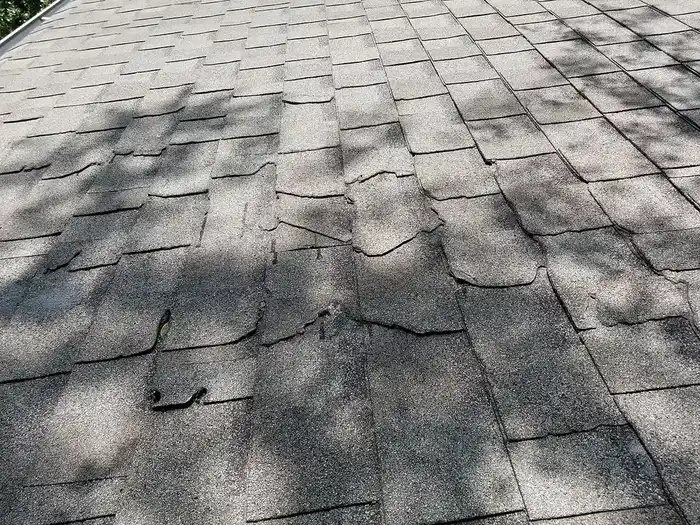

A proper trace starts in the attic, where stains on decking and rafters map the water's route in reverse - follow the marks uphill and they narrow toward the entry. Then the roof above those marks gets a close read: seams flexed by hand, flashing probed, drainage tested. Many leaks surrender to that combination. The ones that do not get the water test: a hose run on one section at a time, low to high, while a second person watches the attic - the section that drips is the section that owns the leak.
What a trace should never be is a tube of sealant and a hope. Shotgun sealing covers evidence, adds future diagnostic noise, and leaves the entry working under a cosmetic skin. The deliverable of a real trace is a named entry point with a photograph - after which the repair is usually the easy part, and its success can actually be verified by test.
Leaks that happen only at the height of a storm, then stop, usually live high - a ridge, a vent, a lifted seam that needs driven water. Leaks that continue for hours after rain ends are drainage stories: ponded water seeping through a seam at its leisure. Leaks in gentle rain are direct paths - an open crack, a failed canale surround, a hole with a straight story to tell.
Season patterns talk too. A leak that appears only in monsoon season may need wind-driven rain; a leak that appears in winter may be snowmelt taking a slow path no rain ever used. Write the pattern down with dates - it shortens the trace more than any other single thing an owner can do.
Some ceiling water is an impostor: swamp cooler pans and lines overflow or leak in summer - the classic Albuquerque false alarm, arriving in the same season as monsoon leaks. Plumbing vents, water lines in attics, and condensation on ductwork also masquerade as roof failure. A good trace rules these in or out early - cooler pads and pans checked, lines inspected - because repairing a roof for a cooler's leak fixes nothing but the invoice.
The tell is often timing: cooler leaks follow cooler run-times, not storms; plumbing leaks ignore weather entirely. A leak that correlates with neither rain nor equipment deserves the full trace. Honest roofers name these impostors when they find them - it costs them a job and buys them a reputation.
Leaks obey a rule roofers learn early: water enters where it wants and shows where it pleases. It can enter at a vent on the ridge and appear as a stain two rooms downhill, having ridden a rafter the whole way. Repair work is therefore a tracing discipline - from the stain upward, through the attic's water-marked wood, to the entry - and its quality is measured by whether the leak's story was actually solved, not by how much sealant was spent near the stain.
That is the service side of this guide's subject. When you are ready, the Roof Repair page carries the process, the coverage by neighborhood and the number to call.
When it leaks, how hard it must rain, how long after - the leak's behavior interviewed before anyone climbs.
Stains and water marks traced uphill to the smallest area that can own the entry.
Drainage, seams, flashings, penetrations, then field - close up, by hand, above the mapped area.
Section-by-section hose test with eyes in the attic - the entry confirmed, repaired, and retested.
photograph it, date it, note the weather that preceded it.
Check the swamp cooler pan and lines before assuming the roof (summer's classic false alarm).
Do not paint over a stain until the entry is found - the stain is evidence.
After repair, keep watching the spot through two storms before closing the file.
A leak call should produce a named entry point with photographs, an explanation of the path the water took, the repair performed on the entry (not the stain), and a verification - water test or storm watch - that closes the case.
If a visit produces only sealant and reassurance, the case is not closed; it is postponed. The standard to hold is evidence in, evidence out.
Professionals test their repairs. A water test after the fix - same section, same conditions that produced the leak - turns 'should be fixed' into 'was leaking here, is not leaking now'. Homeowners are entitled to ask for that proof, and the roofers who offer it unprompted are telling you something about how they work.
Sealing a wide area 'to be safe' and burying the evidence.
Repairing at the stain instead of at the entry the attic evidence names.
Skipping the swamp-cooler check and repairing a roof for a cooler's leak.
Declaring success before the repair has met its first real storm or test.
Leaks feel mysterious only until someone follows the water's own map. The attic holds the map, the pattern narrows it, and the entry - once named - is usually a modest repair. The expensive version of every leak is the one traced late or sealed blind.
The same roof lasts years less in Albuquerque than in a mild climate - UV at a mile high, daily temperature swings and wind spend a roof's life faster than rain ever will.
Read the GuideHail damage is mostly invisible from the ground - it bruises shingles, cracks tile, pits foam and loosens fasteners, and the proof lives in a hands-on inspection with dated photos.
Read the GuideBecause water runs before it drops. The stain is where the path ended - often along a rafter or a deck joint from an entry that can be several feet, sometimes rooms, away. The roofer is following the trail the water left in the attic, which is the only honest map to the source.
Directional openings. A lifted seam or cracked flashing may shed gentle rain falling straight down, then admit wind-driven monsoon rain pushed under it, or ponded water that finally reaches its level. Intermittent leaks are not imaginary leaks - they are specific openings with specific weather requirements, and the pattern helps identify them.
Almost never properly. Interior patching fights the water at the end of its path, where it has already soaked the assembly, and usually diverts it to a new exit rather than stopping it. The entry is on the roof; the repair belongs there. Interior work is for drying and repairing the damage the water left behind.
A small leak is a small entry and a growing interior problem. Between storms, the water it admits spreads in insulation and decking silently - the visible stain lags the real damage by months. The tracing is also easiest while the trail is fresh. Days are fine; seasons are expensive.
One call connects you with a roofing professional serving Albuquerque and the surrounding communities - inspection, repair, replacement and upkeep.
📞 Call Now