Tile sheds most water, but the underlayment beneath it is what actually waterproofs the roof - and in Albuquerque heat it bakes brittle and fails in twenty to thirty years while the tile still looks new.
Problem: Tile sheds most water, but the underlayment beneath it is what actually waterproofs the roof - and in Albuquerque heat it bakes brittle and fails in twenty to thirty years while the tile still looks new.
Solution: Read the felt at eaves and valleys, keep valleys clear and broken tiles replaced, and plan the lift-and-relay renewal when the felt's time comes - tile off, new underlayment, tile back on.
When to call: Call when a tile roof leaks with no visible damage, when felt crumbles at the edges, or when a 1990s-2000s tile roof has never had its underlayment checked.
Ask a tile roof owner what their roof is made of and they will point at the tile. Ask a roofer, and they will point under it. The tile on an Albuquerque home is a beautiful, durable rain screen - but the layer doing the waterproofing is a sheet of felt-based underlayment that nobody sees, quietly baking in an oven of trapped heat until it turns to cracker. This guide is about that hidden layer: what it does, how it dies, how to read its condition, and how it gets renewed without losing the tile above it.
The Albuquerque Angle
Wind is the third force. Spring is wind season, when gusts sweep off the West Mesa and through Tijeras Canyon for weeks at a time, and monsoon storms add their own outflow blasts in summer. Loose shingles, lifted tiles and tired seams are found by the wind long before they are found by the homeowner.
Two Roofs in One: Armor Above, Skin Below
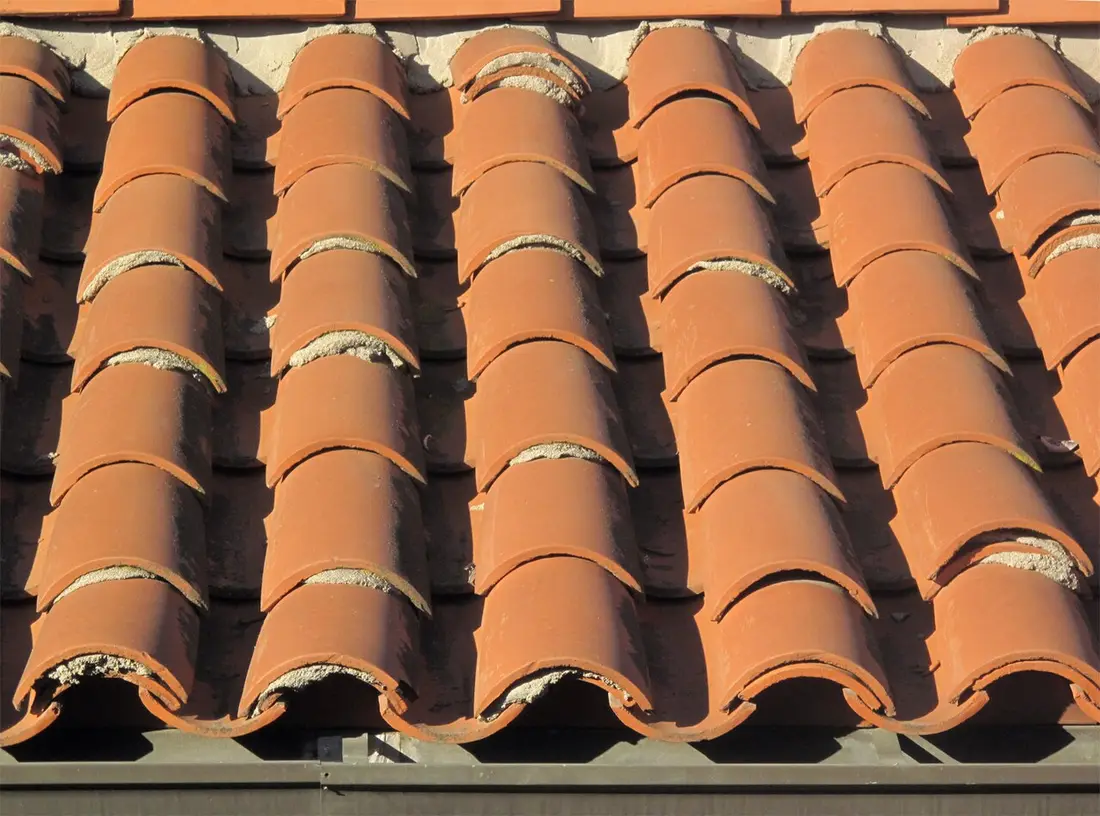
Tile roofs work as a partnership. The tile takes the weather's direct assault - sun, hail, the first force of rain - and sheds the great majority of water down its channels. But tile is not sealed: wind drives rain under it, broken pieces funnel water through, and every roof gets wet underneath sometimes. The underlayment is the drainage plane that catches all of that and carries it safely to the eaves. When both partners work, the roof is superb - and the tile's own life stretches past fifty years.
The catch is the lifespan mismatch. Tile is nearly permanent; underlayment is not. It is an asphalt-and-felt product living in the hottest microclimate on the house - under dark tile, in still air, at temperatures that can pass 170 degrees. Heat cooks its oils out year by year. The result is the most common tile-roof story in this city: a roof that looks twenty years younger than it leaks.
How Felt Fails, and the Clues It Leaves
Failed underlayment is brittle: it cracks at folds, splits along nail lines, and crumbles where it is handled. On the roof, the evidence is indirect - leaks that appear in the same ceilings each monsoon, water stains at valleys and wall lines, and tile that keeps testing sound while the house keeps getting wet. At the eaves, where the felt sometimes shows, crumbling or torn edges are the visible tip of the roof's real condition.
The definitive read requires lifting tiles - samples at eaves, valleys and a field area - and looking at the felt directly. A careful roofer does this gently and puts everything back. The grades run from 'sound and flexible' through 'aging but working' to 'cracker-dry', and each grade points at a different scope: leave it, maintain it, or plan the renewal. Any tile diagnosis made without this look is a guess in a nice truck.
PROBLEM
→
SOLUTION
Lift-and-Relay: The Renewal That Keeps the Tile
When the felt's time has come, the standard renewal is lift-and-relay: crews lift the tile slope by slope, stack it safely, strip the old underlayment, inspect and repair the deck, install modern underlayment, and relay the original tile - replacing broken pieces from matched stock. The homeowner keeps the roof's look, its remaining decades of tile life, and gains a waterproofing layer with a fresh twenty-to-thirty-year clock.
It is substantial work, and it is still routinely the smart spend on a tile roof - because the alternative, a full tear-off and new tile, discards the most valuable part of the existing roof. Sections can sometimes be done in phases, worst slopes first, valleys always early. What cannot be done is renewing the felt from above: no coating or sealant sprayed on tile reaches the layer that matters, and money spent there is spent on the wrong roof of the two.
What Lifting Tiles Reveals, Valley by Valley
A sample lift at the eave often shows felt that looks merely old; the same roof's valley tells the truth faster, because valleys concentrate heat, water and debris. Crews read several addresses before grading the whole roof: eave, valley, a sunny field slope, a shaded one. The spread between best and worst felt on one roof can be a decade, which is why phasing a relay - worst slopes first - is sometimes the honest scope.
Deck condition is the lift's second revelation. Where felt failed long ago, decking beneath valleys and eaves may be stained or soft. Finding that during a planned relay is a manageable repair; finding it during a ceiling collapse is not. The lift is cheap information about expensive things.
Synthetic Underlayments: The Modern Replacement
The felt going back under tile today is a different species from what is coming off: synthetics and modified membranes engineered for the under-tile oven, with temperature ratings the old felts never carried. Their arrival is quietly extending the relay interval - a modern underlayment under sound tile is the closest thing tile roofing has to a permanent fix.
That makes the product question worth asking at quote time: which underlayment, what is its high-temperature rating, and how is it lapped and fastened at valleys. The answers are checkable against manufacturer literature - one of the few parts of a roofing bid a homeowner can verify from the couch.
Myth vs Fact
The Myth
Tile roofs are permanent and maintenance-free - that is the whole point of tile. The tile is close to permanent. The roof - the waterproofing - is not, and the brochure rarely separates the two.
VS
The Fact
Every tile roof has a mid-life underlayment renewal built into its story. Planned, it is a lift-and-relay that keeps the tile and renews the waterproofing for decades. Unplanned, it is the same work - plus the water damage that announced it.
The Related Service, In Depth
The lift-and-relay is tile roofing's defining job and its best bargain: the expensive, beautiful, nearly permanent part of the roof - the tile - is kept, while the mortal part - the underlayment - is renewed. Homeowners who understand this budget for one relay in a tile roof's long life and are never surprised by it. Homeowners who were told tile is 'maintenance-free forever' meet the same job as a betrayal, which it is not.
That is the service side of this guide's subject. When you are ready, the Tile Roofing page carries the process, the coverage by neighborhood and the number to call.
The Process, Step by Step
Lift samples and grade the felt
Eaves, valleys and field - the underlayment's condition read directly, not inferred from the street.
Fix the piece-work
Broken and slipped tiles replaced, valleys cleared, flashings renewed - the upkeep that protects whatever felt life remains.
Scope the renewal by evidence
If felt is spent: lift-and-relay, phased by slope if the roof allows, with deck repair included in the plan.
Relay with matched tile
Original tile back down, broken pieces swapped from matching stock, and the new underlayment's date put on record.
Prevention Checklist
Keep valleys clear - dammed valleys are where felt dies first and leaks start.
Replace cracked tiles promptly; each one pours water on the felt in every storm.
Have the felt sampled every few years after the roof turns fifteen.
Keep limbs off tile roofs; impact breakage multiplies fast under a falling branch.
Save a few spare tiles from any work done; matches get harder to find as profiles age.
A Field Checklist for Your Own Home
Know your roof's install era; 1990s-2000s felt is in the window now.
Keep valleys visibly clear from the ground - binoculars count.
After any tile work, ask for the felt's condition where tiles were lifted, and log it.
Keep spare tiles from every job; future matches depend on today's leftovers.
What the Paperwork Should Show
A tile-roof assessment should include sample lifts at eave, valley and field, a felt grade per location, broken and slipped tile counts, valley and flashing condition, and an honest phasing opinion: what is due now, what can be scheduled, and what should simply be watched.
A lift-and-relay quote should name the underlayment product and its high-temperature rating, the deck-repair handling, and the tile-matching plan - the three places relays differ.
How a Professional Works This Problem
The mark of tile-roof professionalism is what gets checked while tiles are already lifted for any reason: felt grade, deck state, flashing condition - read and reported even when the visit was booked for something else. Tile work that ignores the underlayment it exposes is a missed diagnosis the homeowner paid to make possible.
Mistakes That Make It Worse
Diagnosing a tile roof's leaks without ever lifting a tile.
Spraying sealant or coating over tile to 'fix' failed felt underneath it.
Replacing the underlayment with standard-grade felt in an under-tile oven.
Discarding broken-tile matches and old stock that future repairs will need.
The Bottom Line
Your tile roof is two roofs sharing one address, and the hidden one has a birthday coming whether it is celebrated or not. A sample lift is a small, traceless inspection that tells you which birthday - this year or in a decade. Worth knowing before the monsoon votes.
A foam roof is only as good as the coating over it: spray foam cannot face Albuquerque's UV alone, so the coat is renewed every five to seven years - that cycle IS the roof's lifespan plan.
The monsoon does not damage sound roofs - it finds the damage the dry season already did, and delivers a season's worth of rain in single afternoons from July through September.
How old is the underlayment problem - when should I worry?
Felt installed in the 1990s and early 2000s is the current concern in Albuquerque - roofs of that era are entering the failure window together, and this city's tile subdivisions were built in waves. Any tile roof past twenty years that has never had its felt sampled is a candidate for the look.
Can I see the underlayment without lifting tile?
Partly: the felt shows at some eaves and rake edges, and crumbling there is a strong signal. But eave felt lives cooler and drier than field felt, so a clean edge does not clear the whole roof. The sample lift is the honest test, and it leaves no trace when done properly.
Is lift-and-relay cheaper than a new tile roof?
Substantially, in most cases - the tile itself, the most valuable component, is reused, and there is no tear-off disposal of it. The comparison that matters, though, is against doing nothing: a roof leaking through failed felt is spending the house's deck and ceilings in the meantime.
What underlayment goes back under the tile?
Modern synthetic and premium modified underlayments built for high heat - materials rated for the temperatures under tile in this climate, which is the exact specification the original felt so often missed. Asking which product, and what its high-temperature rating is, is a fair question with a checkable answer.
Please note: Albuquerque Roofing Pros is an independent directory and referral service, not a roofing contractor. The professionals reachable through this site are independent businesses; any agreement for work is between you and the professional you engage. Service information on this site is general educational material - the scope of any real roofing work is set by an on-site inspection.
A Leak Over the Living Room, Tiles on the Driveway or a Flat Roof Holding Water?
One call connects you with a roofing professional serving Albuquerque and the surrounding communities - inspection, repair, replacement and upkeep.